Upcoming Webinars
October 6th
STARTING WITH CHILDREN:
From Everyday Places to Transforming Cities.
Petra Marko,
CEO at Metropolitan Institute of Bratislava, Slovakia
October 20th
THE LOOP •
80 Kilometers Connecting Communities.
Jen Angel, CEO, and Lois Lindsay CPO,
Evergreen, Toronto, Canada
November 3rd
THE OUTDOOR SALON:
How cities can bring people together.
Susan Pinker
Psychologist. Author. Behavioural Science Columnist. Montréal, Canada
View and share all past sessions
- All
- Children
- Olders
- Parks
- Walk & Bike

Petra Marko • Starting with Children: From Everyday Places to Transforming Cities
 Webinar

Adriana Akers and Clara Bitter • Thriving Foodscapes: How urban design shapes what we eat
Webinar

Anna Zivarts • When Driving Isn’t an Option: Steering Away from Car Dependency
Webinar

Krista Nightengale • BUILDING BETTER BLOCKS
Webinar

Jim Burke • The Unexpected Power of Open Streets
Webinar

Doug Gordon & Sarah Goodyear • Imagining a Life After Cars
Webinar

Mark Nieuwenhuijsen • Can Public Spaces like Barcelona’s Superblocks Make Cities Healthier?
Webinar

Dr William Bird and Stephen McPeake • Tech and Games that Create Health
Webinar

Jay Pitter • Black Public Joy: No Permit or Permission Required
Webinar

Anna König Jerlmyr, (F) Mayor Stockholm • The Rise of 7000-step city
Webinar

Hélène Chartier • The Neighborhood Revolution • Shaping Healthy Cities
Webinar

Tom Flood • Remarketing our Roads
Webinar

Larry Beasley, Michael White • Planning the Future of Abu Dhabi
Webinar

Ole Kassow and Pernille Vedersø Bussone • Cycling Without Age: The Right to Wind in Your Hair
Webinar

Ann-Britt Elvin Andersen • Unlonely Cities: How Urban Systems can both Produce and Prevent loneliness
Webinar
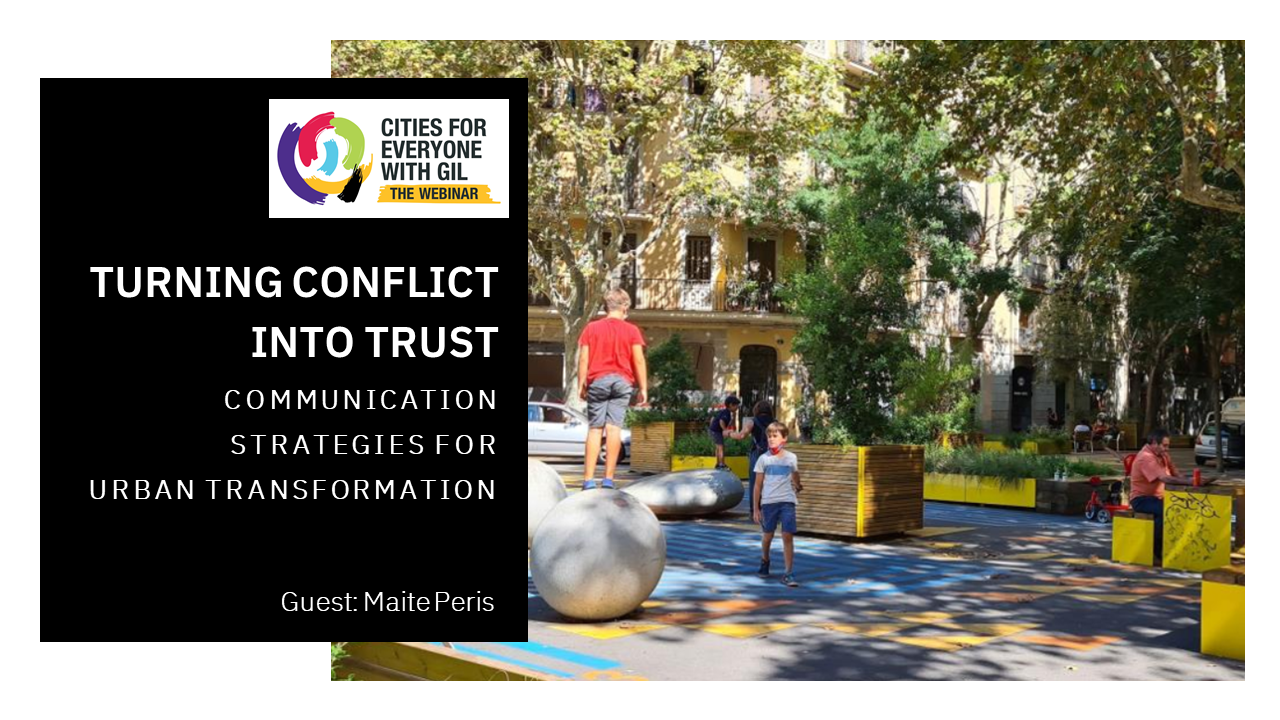
Maite Peris • Turning Conflict into Trust: Communication Strategies for Urban Transformation
Webinar

Chris & Melissa Bruntlett • Women Changing Cities: Global Stories of Urban Transformation
Webinar

Tim Gill • Last Child in the Street? Building the case for cities that truly put kids before cars
Webinar

Dr Maxwell Hartt • Aging Playfully: Reimagining the Possibilities
Webinar
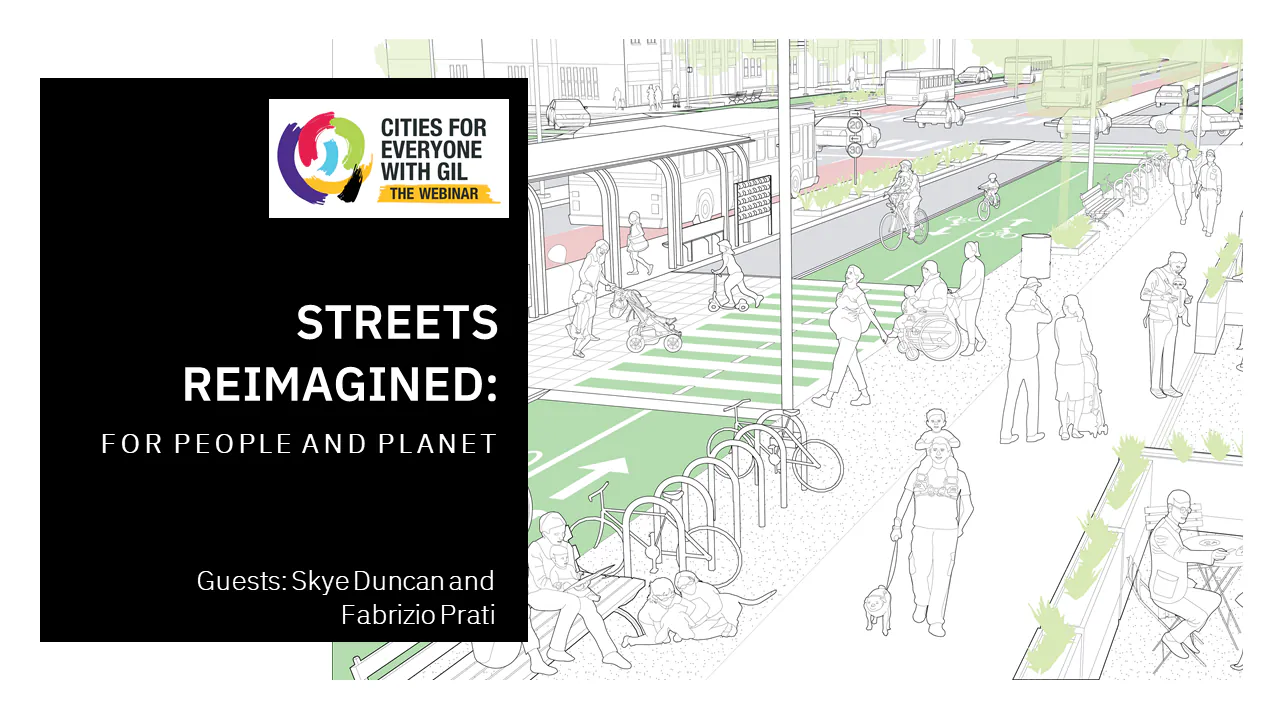
Skye Duncan and Fabrizio Prati • GDCI • Streets Reimagined: for People and Planet
Webinar
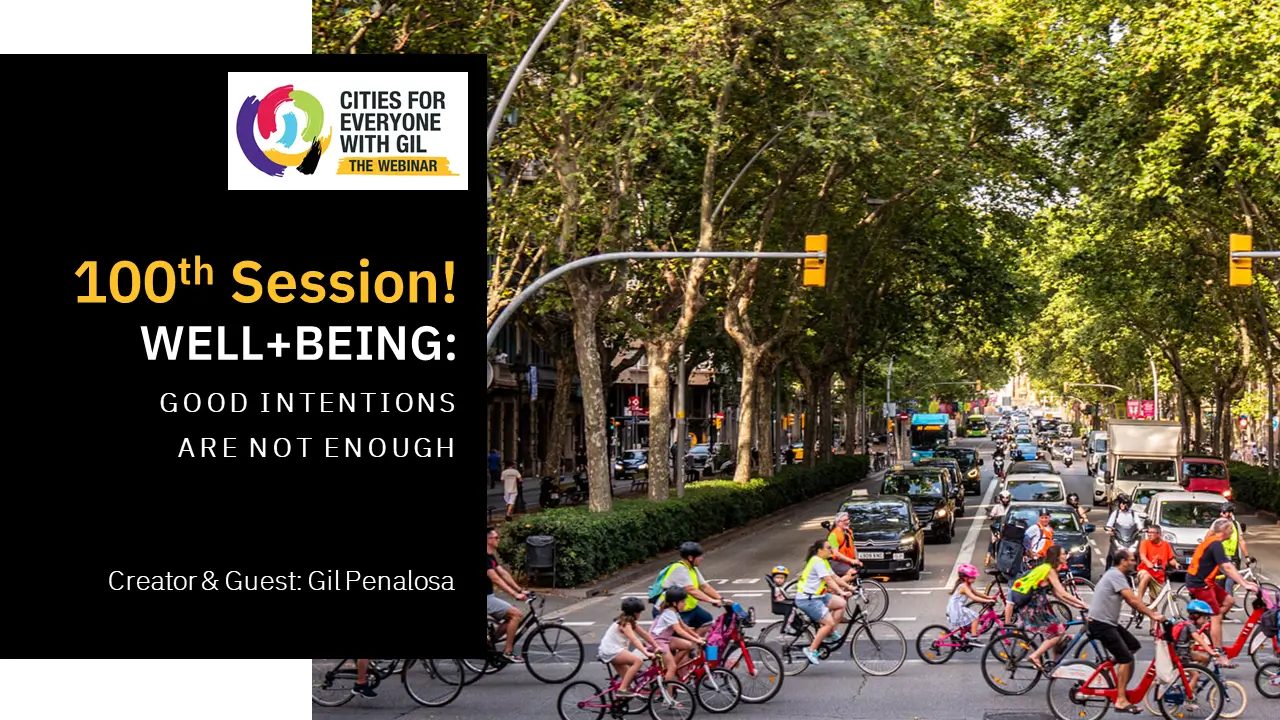
Gil Penalosa • Well+Being: Good Intentions are Not Enough
Webinar
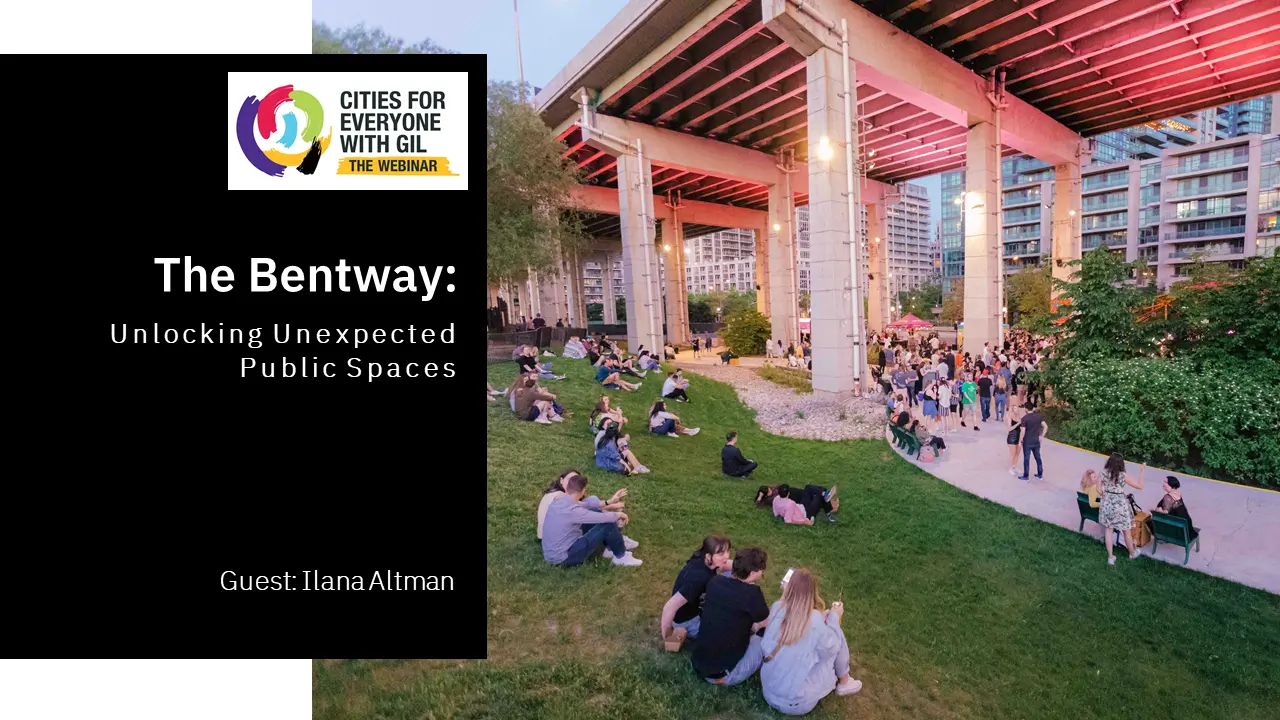
Ilana Altman • The Bentway: Unlocking Unexpected Public Spaces
Webinar
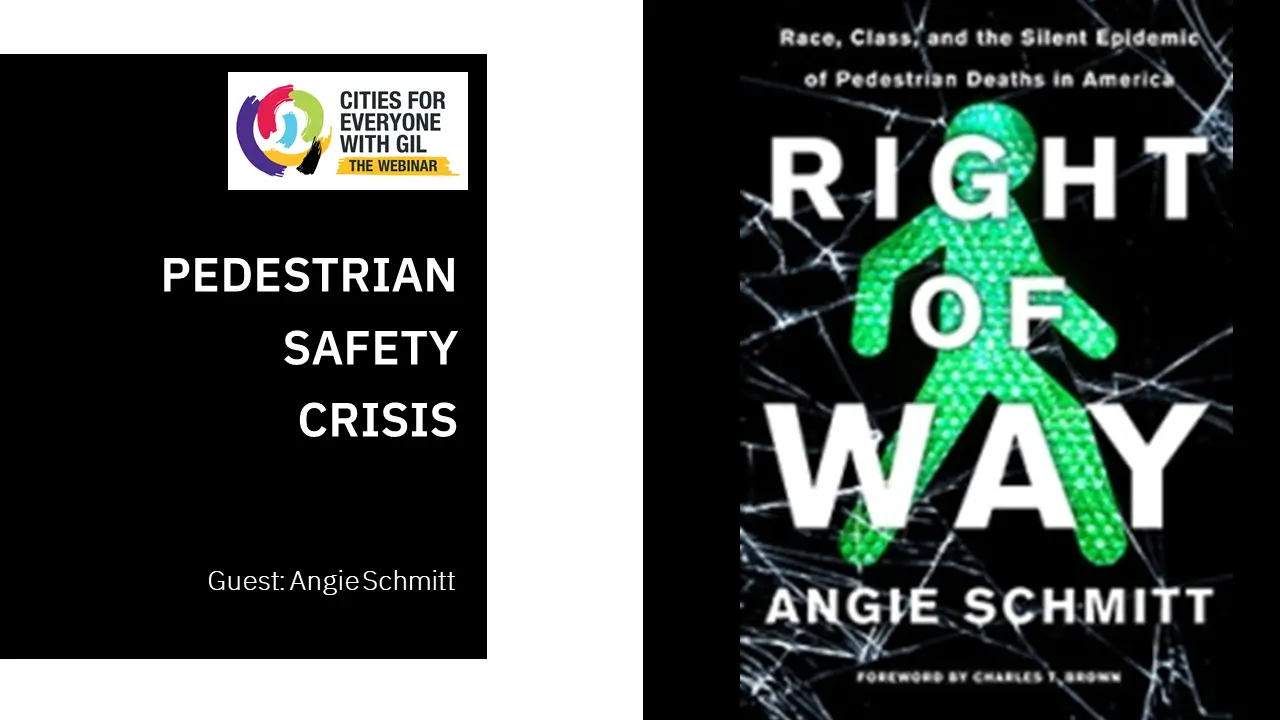
Angie Schmitt • Pedestrian Safety Crisis
Webinar

Kristian Villadsen • Urban Life and Sustainable Behaviour
Webinar

Ellen Dunham-Jones • Retrofitting Suburbia for Urgent Challenges
Webinar

Philip Ginsburg • San Francisco’s Parks: JFK Promenade and Sunset Dunes
Webinar

Sam Balto • BIKE BUS: Moving Cities Toward Joyful, Child-Friendly Streets
Webinar

Olivia Nielsen • Empty Homes, Crowded Cities: Exploring the Global Housing Paradox
Webinar

Shannon Baker • Biidaasige Park: Connecting Nature and the City.
Webinar

Janette Sadik-Khan • Streetfight: Handbook for an Urban Revolution.
Webinar

Carl Elefante • Going for Zero: Decarbonizing the Built Environment on the Path to Our Urban Future.
Webinar

Cristina Garrido, CEO Anteverti • Rethinking Smart Cities. Leaving no-one behind.
Webinar

Gideon Berger, Rachel Bennett, Wayne Miles • Nature Based Solutions for Managing Stormwater: Creating Parks & Urban Resilience.
Webinar

Alexa Bush • Building Civic Trust and Economic Recovery through Public Space. Case: Detroit, USA
Webinar

Victor Lasa • The Challenge of Sustainable Urban Tourism. Case: San Sebastian, Spain
Webinar

Meredith Glaser • Why Mobility Transitions Do Not Start with Mobility
Webinar

Daniel Parolek • What do Missing Middle Housing, Walkable Urbanism, Zoning Reform, More Resilient Communities, Have in Common?
Webinar


Mayor Linda Buchanan • Building a Healthier City of North Vancouver. Canada’s 2024 Most Livable City
Webinar
Giselle Sebag • How Thriving Cities Define Our Health, Happiness, and Future
Webinar
Priscilla Benedetti, Jordi Honey-Rosés • School Streets: Enhancing Neighborhoods in Paris & Barcelona
Webinar
Hélène Chartier • The Best Climate Activist is a Good Urban Planner
Webinar
Emma Avery, Leah Karlberg • The Power of Placemaking: Creating Happier Cities from the Ground Up
Webinar
Mitchell Cohen • Rhythms of Change: Reflections on the Regent Park Revitalization
Webinar
Jesse Shapins • Experiments in Urban Entrepreneurship. Place-based innovations
Webinar
Bridget Marquis • The Power of the Commons: Public Space for a Higher Purpose
Webinar
Theresa Williamson • Sustainable Favelas: The Key to Climate Justice and Thriving Cities?
Webinar
Adam Bienenstock • Natural Playgrounds: The Science and Irony behind an Obvious Climate Solution
Webinar
Dagur Eggertsson, Mayor Reykjavik. • The transformation of a young city
Webinar
Gil Penalosa • Copenhagen: What’s so good about it? Through the eyes of a Colombo-Canadian
Webinar
Enrique Peñalosa, former Mayor of Bogotá • Equality and the City. Urban Innovations for All
Webinar
Sílvia Casorrán & Marianne Weinreich • Bicycling for Everyone • Copenhagen & Barcelona
Webinar
Ethan Kent • People Powered Places: Placemaking With Local, and Global, Networks
Webinar
Marco te Brömmelstroet • Urban Cycling. Why was John Lennon in bed with a bicycle?
Webinar
Wanda Dalla Costa • Indigenous Urbanism. (Presendter did not allow to share video)
Webinar
Gil Penalosa • Lessons from the first 50! Let’s celebrate and review key learnings
Webinar
Mike Lydon • Tactical Urbanism: Transform your City. Today!
Webinar
Sara Candiracci • Child-Friendly and Playful Cities
Webinar
Erion Veliaj, Mayor Tirana, Al. • A Good City for Children and Youth, will be a Good City for All
Webinar
Xavier Matilla • SuperBlocks in Barcelona. The City that we want
Webinar
Eti & Ken Greenberg • Exploring Toronto – A city reveals itself in its special Public Places
Webinar
Antonio Gomez-Palacio • Well-being by Design. A purpose-driven design practice
Webinar
Dan Biederman • Placemaking Tools That Have Worked In Bryant Park And Elsewhere
Webinar
Dario Hidalgo • Bus Rapid Transit (BRT): A low cost, rapid implementation, high impact mode
Webinar
Gil Penalosa, Amanda O’Rourke • 8 80 CITIES – Igniting Action & Challenging the Status Quo
Webinar
Michael Boland • Creating a National Park for All at the Golden Gate, San Francisco
Webinar
Allison Schwartz, Bradley Topol, Ryan Sharp • Safe Streets. Saving Lives and Advancing Equity
Webinar
Jorge Pérez Jaramillo • Medellín case study. Architecture, Urbanism and Planning
Webinar
Melissa & Chris Brunlett • Equity in the Low-Car City. Walk, Ride Bicycles, Use Public Transit
Webinar
Helle Lis Søholt. Founding Partner, CEO Gehl Arch. • Cities for People
Webinar
Jeff Speck • The Walkable City
Webinar
Carlos Moreno • The 15-Minute City
Webinar
David Sim • Soft City: Building Density for Everyday Life
Webinar
Dan Burden • Walkable, Green, Streets: Advancing Health, Wellness, & Economic Vitality
Webinar
Pascel Salah, Omar McCodi • Canada’s New National Urban Parks program & Rouge National Urban Park
Webinar
Brent Toderian • Density vs Nature in Cities? No More False Choices
Webinar
Sadiya Muqueeth, Mary Alice Lee, Danielle Denk • Greening Schoolyards: Spectacular Opportunity Everywhere
Webinar
Melissa Lem, Jenny Roe • How Can Nature & Cities Improve Our Health & Well-Being?
Webinar
Gil Penalosa, Dr. Olga Sarmiento • Open Streets / Ciclovias: Meeting as Equals
Webinar
Dep. Mayor Ana Oregi, Mayor Lisa Helps • Vitoria-Gasteiz, Spain & Victoria, Canada: Great Park Systems
Webinar
Rob Adams • The 7.5% City: Doubling Melbourne’s population in existing footprint
Webinar
Donnie Rosa, Emily Dunlop • Vancouver’s Stanley Park: Reconciling for the Future
Webinar
Lysa Ratliff, Juan Diaz • Better Playgrounds, Healthier Communities. People Participating
Webinar
Kristine Stratton, D.Sc. Erja Rappe, Sarah Lusina, Rebecca Delphia • How Can Parks Help Us Live Older, Healthier, Happier?
Webinar
Cecilia Vaca-Jones, Sarah Milligan Toffler, Tim Gill • Children & Parks / Nature & Cities
Webinar
Jenny Moodley, Gretchen Wilson-Prangley, Zviko Kanyoka • Bridging the Green-Divide in South Africa
Webinar
Nadina Galle, Cecil Konijnendijk • Trees & Parks: Creating Greener Cities for All
Webinar
Mayor Erion Veliaj, Tirana, Albania • Restoring the Joy of Parks in our Communities
Webinar
Chris Glaisek • Waterfront Toronto: Moving the Don River. Nature. Climate change. Resilence
Webinar
Ruth Lin Wong Holmes • London’s Queen Elizabeth Olympic Park: East London’s transformation
Webinar
Enrique Peñalosa, former mayor of Bogotá • Parks are ever more Important, Creating Equitable Cities
Webinar
Tanya Muller Garcia, Lilia Haua Miguel • Mexico City’s spectacular Chapultepec Park
Webinar
Mitchell Silver, NYC Parks Commissioner • From Disruptions to an Awakening Planning Parks
Webinar
Dear Participant
This bi-weekly webinar is to contribute creating passionate advocates on doing equitable, sustainable, playful, cities, where everyone lives healthier and happier.
Every other Tuesday I invite fascinating people to share interesting transformative actions. It’s 60 minutes, where in the first half the guest presents, and then we have a dialogue considering the questions and comments from participants.
I am very grateful to always have hundreds of participants, from over 25 countries, a few over 40! They are from all backgrounds, some work in public sector, others private, NGOs, others in active retirement; we also have elected officials, academics, media, etc.
Please invite others to watch live. Also, share the recordings widely, especially with decision makers, community groups, advocates, students, anyone interested in people and cities.
Kindest regards, GIL.